

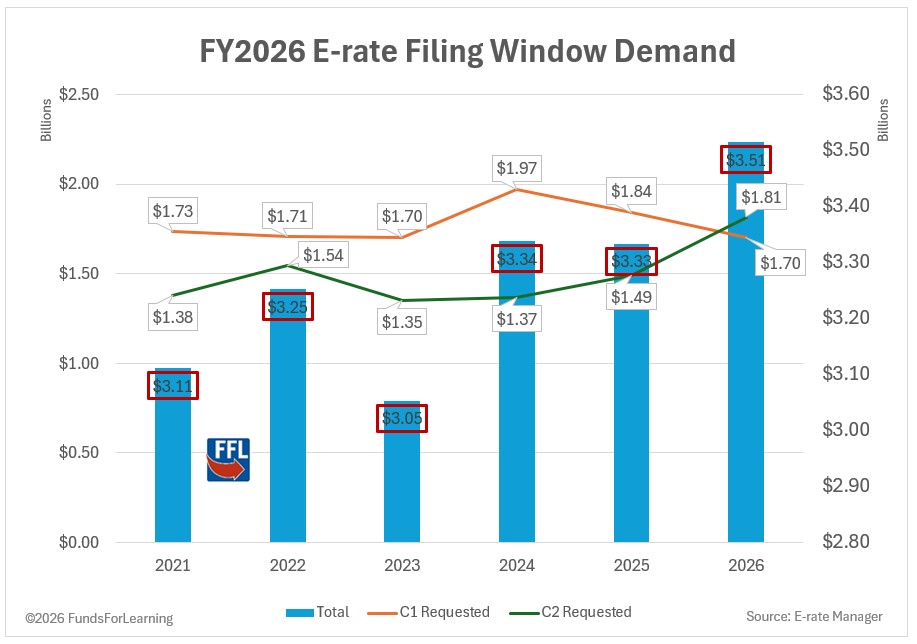
The FY2026 E-rate filing window closed last night, and the numbers are in: schools and libraries across the country requested a combined $3.51 billion in E-rate support — the highest total demand of the modern E-rate era.
That figure alone tells a powerful story. After more than a decade of program evolution, E-rate applicants are telling Washington, in no uncertain terms, that connectivity funding remains essential to their missions. But what makes this year’s results truly remarkable is where the growth is coming from.
Category 2 Demand Reaches an All-Time High
The headline within the headline: Category 2 (C2) demand surged to $1.81 billion, shattering previous records. This is the category that funds the Wi-Fi networks, switches, cabling, and cybersecurity tools that schools and libraries depend on to deliver connectivity inside their buildings.
A major catalyst behind this surge is the reset of Category 2 budgets. FY2026 marks the beginning of a new five-year C2 budget cycle (FY2026–FY2030), which means applicants who had fully exhausted their budgets during the previous cycle are once again eligible for funding. Many schools had gone years without applying for C2 because they had simply run out of budget. This year, that pent-up demand came roaring back.
The number of applicants filing for C2 funding also reached a new peak: 12,210 applicants submitted requests, the most in E-rate history. More applicants requesting more funding is a clear signal that the need for internal connections infrastructure is not slowing down.
Category 1: A Quieter Success Story
On the Category 1 side, applicants requested approximately $1.70 billion for internet access and data transmission services. While that represents a decrease from recent years, it reflects good news rather than declining need.
The cost per megabit of internet bandwidth has been on a steady downward trajectory for years. Applicants are getting faster connections at lower prices, and they are also making more sophisticated purchasing decisions as they better understand their bandwidth requirements. The E-rate program deserves significant credit for helping to drive this competition and cost efficiency in the broadband market.
What This Means for Students and Library Patrons
Behind every dollar of E-rate demand is a school or library working to ensure that students and patrons have the connectivity they need to learn, grow, and succeed. The $3.51 billion in total demand represents real classrooms getting upgraded Wi-Fi, real libraries expanding broadband access, and real communities investing in digital infrastructure.
The record C2 demand is especially meaningful because it reflects investment in the last mile of connectivity — the networks inside schools and libraries that put the internet in the hands of students and teachers. A school can have the fastest internet connection available, but without reliable internal networks to deliver it, that bandwidth never reaches the classroom.
More Analysis Ahead
This is the first look at the FY2026 filing window data. In the weeks ahead, we will be publishing more detailed analysis of the trends driving these record numbers, including a closer look at demand on a per-site basis, changes in the types of services being requested, and what the data suggests about the evolving technology needs of K-12 schools and libraries.
Funds For Learning will be presenting initial findings from this analysis at the CoSN 2026 conference in Chicago on Tuesday, April 14 from 11:00 AM to 12:00 PM CT. If you are attending CoSN, we hope to see you there.
Additionally, our next My E-rate Guides session on April 16 will cover key takeaways from the filing window and what applicants need to know as they move into the post-filing phase. This session is free and open to all E-rate applicants. Register here.
The FY2026 filing window has delivered a clear message: E-rate is vital, demand is growing, and schools and libraries are counting on this program more than ever.


