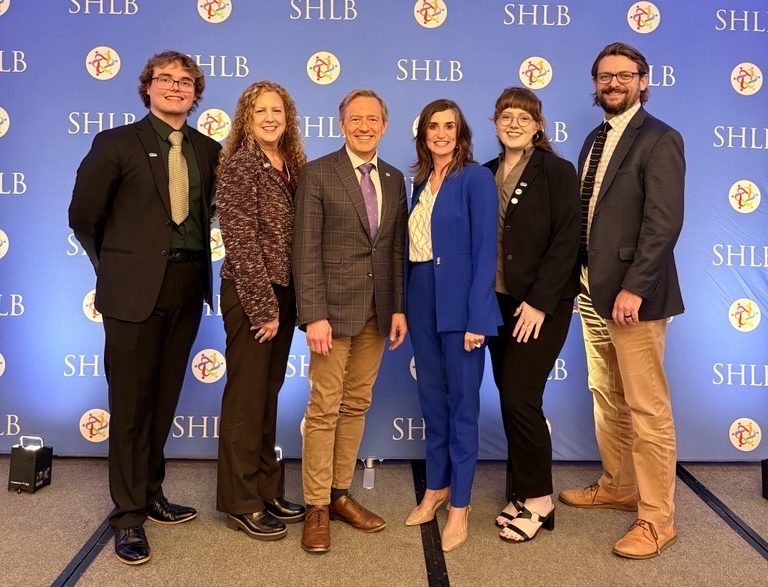
Attending AnchorNETS 2026, the Schools, Health & Libraries Broadband Coalition’s (SHLB) 14th annual conference, was an incredible opportunity. Over three days in Arlington, Virginia, I sat in plenaries, breakout sessions, and workshops covering a wide range of E-rate topics, with some reaching into the Rural Health Care side of the Universal Service Fund. The week also carried a significant weight. The FCC’s June rulemaking, which launched a top-to-bottom review of E-rate and asks whether the program has done its job, was on everyone’s mind.
3 Days of Discussion
Straight from USAC. The USAC Roundtable was candid that it “did not hit the nail on the head” with application volume, which delayed PIA reviews and funding commitments. USAC expects to catch up to its prior-year pace in October or November. Attendees asked for 30-day review status updates, guidance on how EPC handles transition of services, and more PIA transparency, including clearer modification notification requirements.
Additionally, USAC covered other topics:
- An approved Service Delivery Deadline (SDD) extension automatically extends your Last Day to Invoice (LDI), so don’t request an LDI extension at the same time. You get one true LDI extension, and filing both uses it up prematurely.
- Approximately $11 million in disbursements are being withheld over Unique Entity Identifier (UEI) issues.
- Cybersecurity Form 484 part 3 will be available before the end of 2026.
The fight for E-rate’s future. SHLB professionals addressed the FCC’s new rulemakings and the push for Congress to act. The bipartisan, bicameral USF Working Group hopes to release discussion draft language in Q4 2026 or Q1 2027, wants USF to be predictable and sustainable for decades, and needs stories from stakeholders. The message to attendees: Assume E-rate will continue, and SHLB will fight to save it if the FCC moves to eliminate it.
Hearing from former commissioners Rachelle Chong, Mignon Clyburn, and Deborah Taylor Tate helped us understand how to advocate. A new Brattle Group study puts the stakes in numbers: eliminating E-rate would reduce U.S. real GDP by about $4.2 billion a year, along with $2.8 billion in real wages.
The competitive bidding portal. This was one of the week’s most discussed topics. The FCC said the portal responds to Office of Inspector General and 2020 Government Accounting Office concerns about potentially self-serving procurement practices and source integrity. It is being built based on the current EPC platform, with user testing and training expected around the end of Q1 or start of Q2 next year. Some attendees worry that leaves too little time for feedback, but the FCC is confident the portal will be ready for the FY2028 procurement season.
Telling the story. Dr. Christopher Ali shared stories from his upcoming book, Where the Wires End: Stories from the Digital Divide. His point: stories move people, and policy, more powerfully than data alone. “The Art of Advocacy,” led by Rachelle Chong, put that into practice. We were paired up for a mock discussion and practiced a 15-minute pitch:
- The ask (0–2 minutes)
- One school or library story (2–5 minutes)
- One local data point (5–8 minutes)
- Be ready for questions and objections (8–12 minutes)
- Re-solidify the ask (12–15 minutes)
The expert panel’s feedback was remarkable, and it gave me a new perspective on the work that goes into fighting for E-rate’s future.
My Reflections
Advocacy is a skill, and it matters. The Art of Advocacy was one of my favorite sessions, which surprised me. I don’t have an advocacy background, but I saw how instrumental it is when the goal is transforming students’ lives. Connectivity is essential for students today, and the work isn’t done. Part of securing it is speaking up in the spaces that matter, to the policymakers who decide this funding, so students’ stories are considered.
Many people don’t know what’s at stake. Schools and parents don’t know the FCC is considering a sunset of E-rate. If they did, they would likely be very concerned: it would essentially be a budget cut, with the gap most likely filled from the classroom. It’s one more reason stories matter, and it echoes what the USF Working Group said it needs.
We’re all asking the same questions. Attendees at the USAC Roundtable and FCC updates had the same things on their minds: the competitive bidding portal, the new transition of service guidance, and how PIA reviews and modification notifications should work to better serve applicants. I’m asking the same questions.
The community is the point. It’s a breath of fresh air to discuss this funding with people who see a different part of the program. The energy across all three days reinforced how dedicated this community is to the mission of Universal Service: connecting anchor institutions to quality, affordable communications.
Looking Ahead
I left Arlington with a better understanding of what goes into fighting for E-rate’s future, and a clearer sense of my own part in it. If I could pass along one thing, it’s the advice from the advocacy session: know your ask, tell one real story, back it up with a local data point, and be ready for questions.
With reply comments due November 12, the conversation is far from over. Funds For Learning has already filed comments on the Notice of Proposed Rulemaking (NPRM), and it is not too late to make your story known! You can file a reply comment through the FCC’s Electronic Comment Filing System (ECFS) under docket 26-133.
About the Author: Hunter Paige is based in Edmond, OK, and has been with Funds For Learning for three and a half years. When she isn’t training for her second half marathon this fall, she enjoys relaxing at home with her two cats, Mona and Diane, starting a new artistic hobby, and catching up on the latest movies and TV shows.